
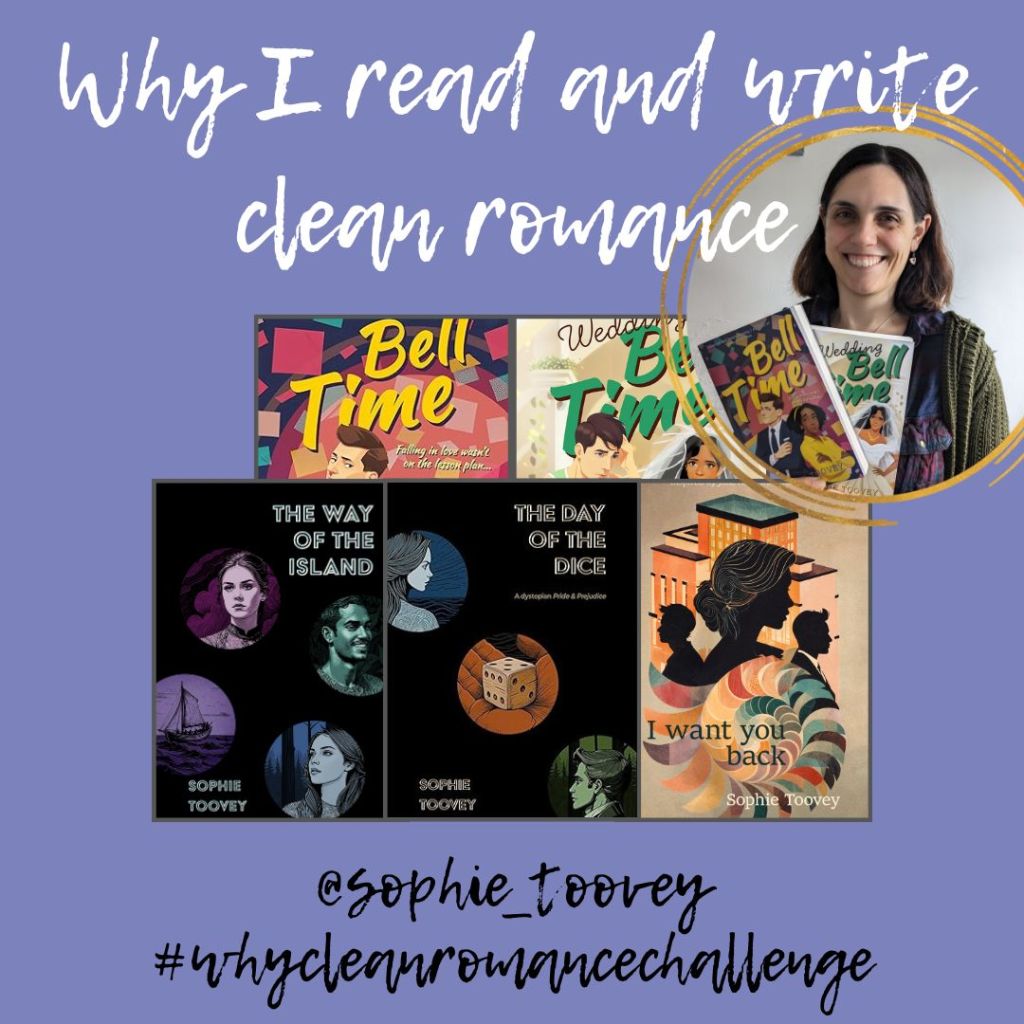
Back in September, quite a few writers I follow on Instagram were posting about this, and I didn’t have time at that point to join in. Now, I’d like to, and I want to give this some context too.
I’ve always loved reading, and I’ve always been pretty voracious with it. When I was in my teens, I’d outgrown kids lit and there wasn’t much at that point in the YA section of the library. I wafted into the adult section and borrowed a heap of stuff, from classics to Mills & Boon. I think at one point I came home with Madame Bovary and Lady Chatterley’s Lover. Books with explicit content are not new! And whilst I quickly realised that there was a tendency to write sexual scenes in a particular way (often idealised, over-romanticised with gloss-over phrases), I didn’t really question whether it was right or not to include them in books. I suppose I reasoned that books were written about every part of life, so why not include every part?
It was when I went to uni that I started to think more seriously about Philippians 4:8:
‘Finally, brothers and sisters, whatever is true, whatever is noble, whatever is right, whatever is pure, whatever is lovely, whatever is admirable—if anything is excellent or praiseworthy—think about such things.’
Studying for an English Literature degree, I had to read a VERY wide range of texts. It made me think more about the content I was CHOOSING to consume. And if I started recognising more the things wrong in my own life—including lustful thoughts and attitudes—I started to join the dots and think that perhaps I should become more discerning about what I fed myself. After all, garbage in, garbage out.
Over the decade that followed, after I graduated, I had an odd relationship with books. I wanted to read, and make time for it in my life, and I felt I should read things with literary merit such as Booker prizewinners, but I struggled to find stories I really enjoyed. When I had my daughter, I picked up a Susan Lewis book from the library, and I think that was the start of not caring what everyone else would think of the books I chose. Why should I feel pressured to always reply with ‘George Eliot’ when asked about my favourite author? Why couldn’t I blitz through an airport paperback without feeling any guilt or shame about the fact that it wasn’t a Pullitzer?
Now, the main problem with being a voracious reader is clearly: how to get more books without spending too much money? I often went to charity shops and picked up cheap paperbacks, but it has to be said, even charity shops are not that cheap for books anymore. Plus, there are the same kinds of authors appearing again and again. The library is a beautiful place and I love it, but again, choice is sometimes limited. I’ve picked up and read a range of romcoms, but I did notice they were becoming increasingly cynical and sexually explicit. I feel jaded enough without books making me moreso.
At the same time, I decided to get back into writing. It was something I always wanted to do, and I was clear in my mind that I didn’t want to write anything ‘open door’. After a long journey trying and failing to get an agent, I felt more and more convinced that self-publishing was not only a great option to get my books out into the world, but also to have that creative control and stick to my guns about the sorts of stories I was going to write. If sexual content was becoming a norm in romcoms, then I wanted to have the freedom to buck that trend. I also wanted the freedom to have faith elements in my stories.
I was delighted when I discovered that there was a huge, warm community on Instagram of writers and readers who felt the same as I did. In the #whycleanromancechallenge, @reading4theheart posted “I want everything I read to honor Jesus. Sex is an amazing God given gift designed for marriage. I love the swoon, anticipation, tension and sizzle found in clean romances.” @jesshansenauthor wrote “I write clean romance for my favourite Beta Reader: My 16 year old daughter. I want her (and all young women) to know what sweet romance can look like out in the real world. I want them to have #couplegoals that match with their self worth, integrity and self respect… I want my stories to be safe for everyone.” @authortiffanynoellechacon wrote “Clean romances reflect my own love story: my husband and I fell in love, got engaged and got married all without premarital intimacy. It was wonderful, fun and beautiful. I write stories like this because it’s what I experience- and I didn’t feel like I was missing out on something! God’s way truly is the best way and I want to honour that in my life and in my writing.” Tiffany also carries on to write these sobering words:
“It’s just a reality that what you put into your body will affect you. When we read explicit material, it affects our neural pathways, it affects how we view relationships, and it affects even our decision-making and emotional regulation. This is particularly true for young people. I don’t want to put this kind of material out there because I believe it has the potential to be harmful to those who read it.”
I absolutely agree with this, and in my Instagram journey, I’ve had the privilege of becoming an ARC reader for many closed-door romance authors. Having my Kindle stuffed full of clean content has been such a huge blessing for me. I’ve barely checked anything out of the library, and I’ve never been short of reading material! Plus, I can have confidence when I read it that there won’t be any dodgy parts I need to skip over or any unexpected scenes. It’s a sweet relief to read something with no bad language, and with heart values that I can truly get behind. That’s why I want to celebrate other closed-door writers and recommend their books to you, like in this post here.
However, I will make a few caveats to finish. I don’t think I would say that I would 100% never read another open door novel again. Firstly, as an English teacher, I do read books with explicit sections, and I discuss these as part of the curriculum and with a literary framework. I think my job would become pretty impossible if I excluded absolutely every book with swearing or sexual material.
Secondly, I didn’t find certain hashtag movements on Instagram that helpful. For example, there have been various waves of bookstagrammers shouting about ‘smut’ and how ‘spicy’ content is ruining the world… It doesn’t look very attractive. I’m not going to promote dark romance or erotica, but I’m also not going to blame it for everything wrong with sexuality in our broken world. It’s a symptom of a cause, not the cause itself. If you eradicated pornography tomorrow, including all of its written forms, you would not stop sin from existing in our hearts and minds. Plus, it’s ludicrous to expect those who are not Christian to have Christian values or to understand sex in the same way that we do. There are some non-Christian authors who I greatly admire, and I enjoy their work, even if they might swear or include sexual content. Sometimes I think we as Christians need to have broader shoulders to engage with the world, with our culture, in order to speak more meaningfully into it. I wouldn’t ever advocate reading something which leads you into sin, but I’m talking about having a dialogue with these writers, rather than blacklisting them and ranting about them online.
Finally, as part of the Philippians verses, I want to celebrate what’s true and real. And that means I won’t advocate a book if I think it’s stupidly ‘fluffy’ and idealistic, as some sweet romances can be. I will include grit and realism in my own books, because I want to reflect the reality of how we live. I don’t think clean or closed door romance should present a version of love that is just as idealistic or glossed-over as a Mills & Boon sex scene. Trying to escape into a fantasy land where ‘cinnamon roll’ male characters know exactly the right thing to do and say all the time, or where marriage is nothing more than a tagged-on “happily ever after” epilogue (with twins), is not biblical or helpful. Heck, when you get married, the fun is just beginning! That’s why my characters are flawed and have to work through their mess together, and I generally use ‘Happy For Now’ endings rather than HEA. I also want to celebrate writers like Drew Taylor for honestly and bravely handling sexual sin and redemption in books like The Designated Date.
Okay, that was a long post. Thanks for reading, and I hope you can check out and support some of these closed-door writers I’ve mentioned. Links below!
 Sophie Toovey